Lake Mendota Dock and Lift Guide for Waterfront Buyers
Buying on Lake Mendota is not just about the view. If a property has a dock, lift, riprap, or a modified shoreline, you are also buying into a set of rules that can affect how you use and improve the waterfront. That can feel like a lot to sort through, especially when you are already evaluating the home, the lot, and the long-term value. The good news is that a few key concepts can make the process much clearer. Let’s dive in.
On Lake Mendota, buyers often focus first on the visible features. You might see a pier, a boat lift, shoreline stone, or a cleared path to the water and assume everything is straightforward. In reality, some features may be exempt from permits, some may be locally regulated, and others may need review by the Wisconsin DNR or local zoning authorities.
That matters because the value of a lakefront property is tied not only to the house, but also to how the shoreline can be used and maintained. If you know what questions to ask before you make an offer, you can avoid surprises and make a more confident decision.
One of the most important terms for Lake Mendota buyers is the ordinary high water mark, often called the OHWM. In Wisconsin, this is the main dividing line for shoreline regulation.
In general, the Wisconsin DNR regulates in-water work below the OHWM. Local governments usually handle zoning, setbacks, and most land-disturbing work above it. That means a waterfront project may involve more than one layer of review depending on where the work is happening.
For Lake Mendota properties, the right local contact depends on where the parcel sits. Dane County states that its shoreland zoning ordinance applies only in unincorporated towns, while incorporated cities and villages use their own zoning office.
If the property is in Madison, lakefront projects may also require a survey and city zoning review. For many Madison buyers, the city zoning office is the first stop for local shoreline questions. If the property is in unincorporated Dane County, county shoreland zoning and the Land and Water Resources office are the better starting points.
Waterfront ownership in Wisconsin includes riparian rights, but those rights exist alongside public rights on navigable waters. Wisconsin’s public trust doctrine keeps public rights primary, even when a shoreline owner has private access rights.
For buyers, the practical takeaway is simple. Owning lakefront property gives you shoreline access rights, but it does not remove public rights tied to navigable water. That is one reason shoreline and pier rules are closely regulated.
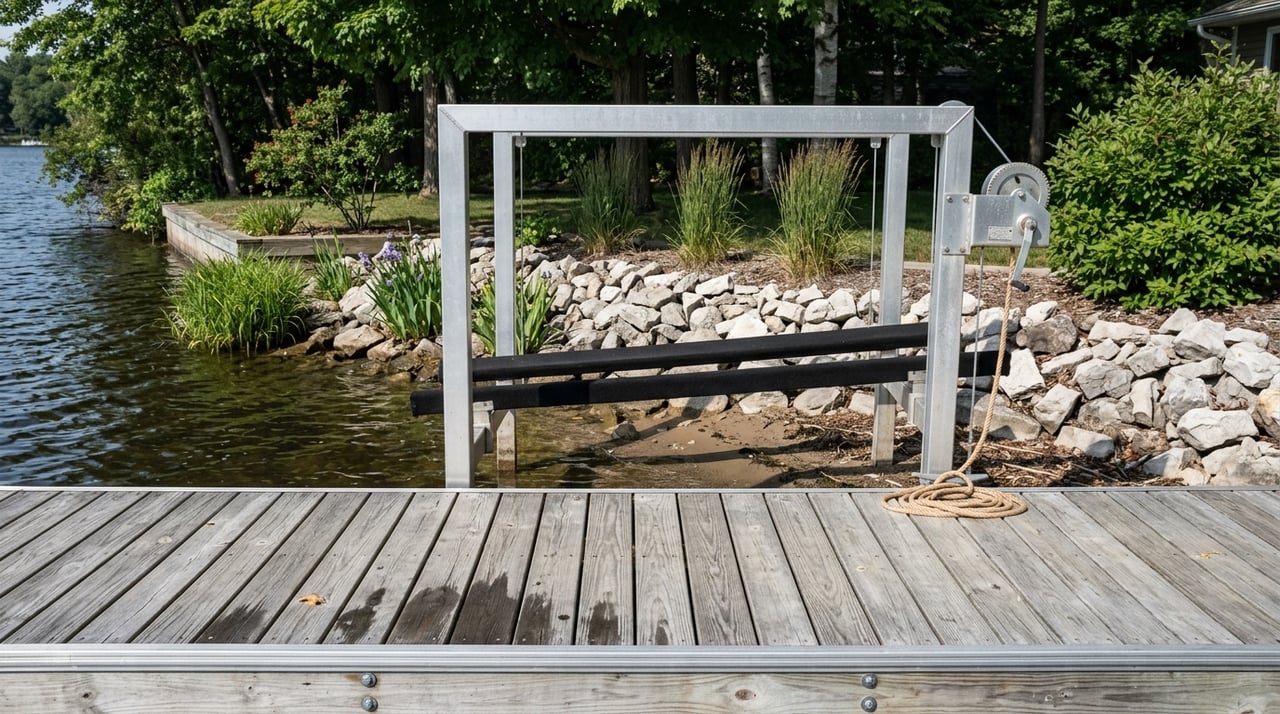
Many Lake Mendota listings include an existing pier or dock setup. The key question is not just whether the pier exists, but whether it is exempt, grandfathered as a legacy structure, or tied to a permit history you should review.
A new pier or wharf can be exempt from a DNR permit if it meets the DNR Pier Planner standards and exemption checklist. Existing legacy piers first placed before April 17, 2012 are also exempt and may keep their existing boat-slip use.
Some buyers assume a large frontage means unlimited dock flexibility. Wisconsin law does not cap the number of separate pier structures on a property, but it does regulate size and use.
For new non-commercial piers, slip counts are tied to shoreline frontage. Local ordinances can also limit placement or require setbacks. In other words, a dock’s capacity and layout are not open-ended just because a property touches the lake.
Boat lifts are another common feature on Lake Mendota. Wisconsin DNR treats a boat shelter as a structure that may include a boat hoist or lift.
Seasonal boat shelters, hoists, or lifts may be exempt if they meet checklist criteria. Most permanent boat shelters, however, need a DNR permit. If a listing includes a lift or shelter, it is worth confirming whether it is seasonal, permanent, and properly documented.
Many of the biggest buyer questions involve the shoreline itself. Riprap, grading, dredging, seawalls, and vegetation clearing can all affect future costs, maintenance, and approvals.
Very small shoreline cleanup can be exempt in some situations. The DNR says hand cleanup and limited dredging around a pier or boathouse may be exempt, and piers, boat lifts, and beach maintenance may proceed without a permit when dredging stays within the minimal-impact threshold.
If a shoreline shows signs of erosion, it is smart to look beyond the cosmetic fix. The DNR recommends identifying the cause of erosion first and using biological shoreline methods when feasible.
Hard-armoring projects such as riprap and seawalls follow their own checklists. Most new seawalls on inland waters require an individual permit. For a buyer, that means an existing seawall or proposed erosion-control project deserves a close review before closing.
If you are buying a Lake Mendota property within Madison, local development rules can add another layer of review. The city limits tree and shrub cutting in the 35-foot strip inland from the water.
Madison also limits how much frontage can be cleared as part of lakefront development review. In addition, boathouses may not be built for human habitation. These details can affect how you plan future improvements or maintenance along the shoreline.
Not every waterfront question is a permit question. Sometimes the issue is a private dispute over placement, access, or use.
If a dock, lift, or shoreline line appears disputed, the DNR recommends trying to resolve the issue with the neighbor first. The agency states that it does not resolve private riparian disputes unless public rights or interests are affected. Buyers should also know that title commitments commonly except rights below the OHWM.
When you are serious about a Lake Mendota property, it helps to request targeted records early. This can clarify whether the current setup is compliant, exempt, or likely to need further review.
Ask for:
For Madison properties, this step is especially important because a registered land surveyor is required for lakefront variance applications, and the survey must show OHWM setbacks for nearby buildings.
Sometimes a project appears to be exempt, but you may still want confirmation before moving forward. Wisconsin DNR offers a voluntary exemption review with a response in 15 working days and no fee.
If a project is not exempt, timing becomes part of your planning. The DNR states that general permits typically take about 30 days, while individual permits usually take about 105 to 135 days. That timeline can matter if you are buying with plans to change the shoreline soon after closing.
Waterfront properties often involve more than shoreline approvals alone. If work touches electrical systems, lifts, or dwelling-related improvements, it is wise to verify that the professionals involved hold the proper Wisconsin credentials.
Wisconsin DSPS provides a public credential lookup, and it also maintains the Dwelling Contractor and Dwelling Contractor Qualifier framework for one- and two-family dwelling permits. For buyers, this is one more way to confirm that past or future work is being handled properly.
Practical details matter too. If you plan to launch a boat while exploring Lake Mendota properties, public access rules are separate from private riparian rights.
Madison Parks requires a Lake Access Permit at Lake Mendota launch sites such as Marshall, Spring Harbor, Tenney, and Warner. That is useful to know if part of your home search includes spending time on the water before you buy.
Lakefront buying is often emotional in the best way. You picture mornings on the pier, afternoons on the boat, and evenings by the water. But the strongest purchases happen when that excitement is paired with careful due diligence.
On Lake Mendota, the most valuable waterfront question is often not “Does this property have a dock?” It is “What exactly is here, how is it regulated, and what options will I have later?” When you answer those questions early, you protect both your enjoyment and your investment.
If you are considering a Lake Mendota property and want a calm, detailed perspective on the shoreline questions that matter most, Susan Sutton can help you evaluate the opportunity with local insight and thoughtful guidance.





Don't navigate the world of real estate alone. Let Susan Sutton be your advocate on the path to finding your dream home or selling your current property. Susan is dedicated to making your real estate journey seamless and rewarding.