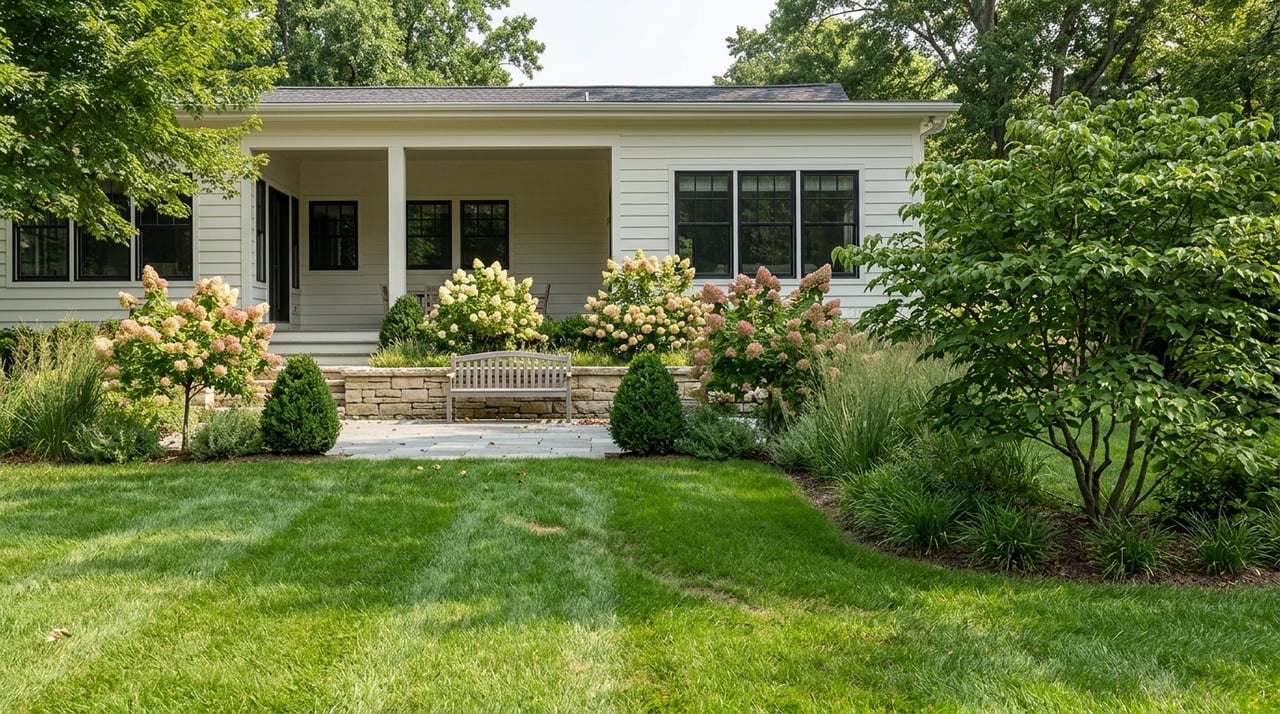
What Sets Carrying Costs on a Lake Monona Waterfront Home
Most buyers comparing shoreline homes on Lake Monona treat the tax line on a listing sheet as a fixed feature of the property, like the frontage or the roof age. On the Monona side of the lake, it is closer to a moving target that you yourself set at closing. The City of Monona revalues every parcel to full market value every single year, and under the valuation hierarchy its assessor follows, the first evidence considered is the price the buyer just paid for that specific property.
That is the friction almost nobody surfaces before an offer deadline. Write a strong number on a Wicawak Bay or Tonyawatha Trail home, and you have not only won the house. You have supplied the comparable sale that repositions your own assessment, and quite possibly your neighbors', the following spring.
When the Monona City Council adopted its budget on December 1, 2025, the headline number moved in the direction homeowners like. The mill rate fell. The bill still climbed, because the base underneath it climbed faster.
| What was reported for the 2026 budget cycle | The number |
|---|---|
| Total city tax levy | $12,160,120.50, up 0.957% |
| City mill rate | $6.09 per $1,000, down 49 cents or 7.47% |
| Median Monona home value used by the city | Up from $435,000 to $469,500 |
| Bill on that median home, after credits | Just over $8,000, an increase of $740 or 9.7% |
Finance Director Marc Houtakker attributed the lower rate to the rise in total assessed value across the city, and the arithmetic follows from there. As the city's own assessment materials put it plainly, assessors do not set tax rates, and a revaluation does not change the amount of money the city, county, school district or technical college collects. It changes who pays which share of it.
That distinction is the whole story for waterfront buyers. When the pot is close to flat and the base is reshuffled, the share moves toward whatever segment appreciated fastest. On a small, lake-heavy roll, that segment is often the shoreline.
Compare the pace. Monona's median assessed value rose roughly 7.9% year over year in that cycle. In July 2026, the Wisconsin Realtors Association reported that existing home sales statewide were up 8.1% from July 2025, with a statewide median of $360,000 and a south central Wisconsin median of $401,476. The regional market has been appreciating at a healthy but unspectacular clip. The assessment roll in Monona has been keeping pace with it or running slightly ahead, which is why a 7.47% rate cut never reached the mailbox.
This is the detail that separates Monona from a generic Wisconsin tax explainer, and it is published by the city itself. For valuation purposes, Monona divides its properties into eight neighborhoods. Four of them are waterfront: Tonyawatha Trail, Wicawak Bay, Monona Drive and the channels. Each is valued on its own terms, and within them, frontage with a view of the Capitol is valued above frontage without one.
Then comes the ordering. Following the Markarian hierarchy, drawn from Wisconsin case law, the assessor sets value first from the recent price paid for the property in question, second from sales of similar properties in the same area, and only then from other methods.
Read those two rules together and the practical consequence is sharp. Your assessment on this shoreline is not derived from a citywide average or a countywide trend. It is derived from your own purchase price, and after that from the handful of valid sales along your particular stretch of frontage. In a city this compact, a single strong closing in the channels can be a meaningful share of the evidence available for that neighborhood the next time values are set.
Two homes may sit 400 feet apart on the same water, at the same list price, and arrive at different assessed values because one sold in a segment where three comparable transactions cleared high and the other sold in a segment that was quiet.
If you close this fall, your first notice as owner of record arrives next spring. Nobody at the city is going to check that number on your behalf.
Here is the part of the story that could change the trajectory. If the shoreline is absorbing a rising share of a nearly flat levy, the only durable relief is a bigger base to divide it across, and Monona has spent years trying to build one.
The city is landlocked and lake-locked, surrounded entirely by Madison, with no cornfields on its borders to annex. Isthmus reported that Monona accounted for about 2% of the roughly 16,000 new rental units built in Dane County between 2010 and 2021, while Madison, Sun Prairie, Middleton and Fitchburg absorbed roughly 85% of them, and that the city has leaned on tax incremental financing as its primary redevelopment tool, including several anticipatory TIF districts created for blighted areas with no specific project yet attached. Yahara Terrace, a 121-unit mixed-use building, is one sign of movement on Broadway. The earlier riverfront work under a master development agreement with Galway Companies delivered The Current, The Current II with 145 units, the 92-room Avid Hotel and a public waterfront park.
The most visible addition is brand new. Topgolf opened its first Wisconsin venue on August 14, 2026, at 6600 Topgolf Way near the intersection of the Beltline and Broadway, the company's 103rd location nationally. Mayor Nancy Moore described it as an anchor for the continued redevelopment of the Broadway Drive corridor.
For a lakefront buyer underwriting a five or ten year hold, that corridor is not background color. Every dollar of new commercial and multifamily value added on Broadway is a dollar of the levy the shoreline no longer has to carry.
Across the water, the mechanics are identical in principle and completely different in effect, because the base is enormous. For 2026, Madison's locally assessed real estate rose 6.1%, with residential up 4.8% and commercial up 8.3%, on a total tax base above $51.8 billion. The average single-family value reached $500,300, a 3.9% increase and the smallest since before the pandemic. The city's own portion of the bill on an average home rose about $30 for the year, on what the city described as its lowest tax rate in at least four decades. A single hot shoreline segment barely registers against a roll that size.
What the Madison shoreline has instead is a construction clock. The roughly $42 million John Nolen Drive causeway reconstruction, the first of three planned phases, replaces six aging bridges with nine, three of them dedicated to pedestrians and bicycles, and rebuilds the failing rock shoreline that had been allowing erosion. Traffic shifted onto the newly built southbound lanes in mid-July 2026, with the Capital City Trail detoured around Monona Bay under a configuration the city expects to hold until mid-summer 2027. North Shore Drive partially reopened on August 10, 2026.
Behind it comes the amenity. Phase one of the Madison LakeWay covers a 0.6-mile stretch of Lake Monona shoreline adjacent to John Nolen Drive, was tentatively set to go out for public works bidding in August 2026, and is expected to begin construction in spring 2027 at a cost of up to about $16 million.
A buyer weighing the two shorelines this fall is choosing between a small tax base where your own transaction moves your assessment, and a large one where the near-term variable is two years of construction preceding a rebuilt waterfront park.
Does paying above asking really raise my own assessment? It can. The valuation hierarchy Monona follows puts the recent price paid for the subject property first. A strong price is not a secret between you and the seller. It becomes evidence.
Is a rate cut ever good news for a lakefront owner? Only if your assessment rose more slowly than the city's total. A falling mill rate paired with a fast-appreciating waterfront segment produces a larger bill, which is exactly what the 2026 cycle showed.
Does the Madison side avoid all of this? No. Madison also values property annually at full market value. The difference is dilution. Its base is large and diversified enough that one segment's run does not reset a neighborhood's share.
Every figure here comes from public budget documents, assessment materials and market reports, and every one of them should be confirmed against the parcel you are actually considering, with your own tax and legal advisors weighing in on your situation.
If you are comparing shoreline options on either side of Lake Monona this fall, the useful conversation happens before the offer, not after the notice. Susan Sutton will walk the specific stretch of frontage with you, pull the sales that will define it, and build the offer strategy around what the number does after closing. Request a Complimentary Home Valuation & Concierge Plan.

Don't navigate the world of real estate alone. Let Susan Sutton be your advocate on the path to finding your dream home or selling your current property. Susan is dedicated to making your real estate journey seamless and rewarding.