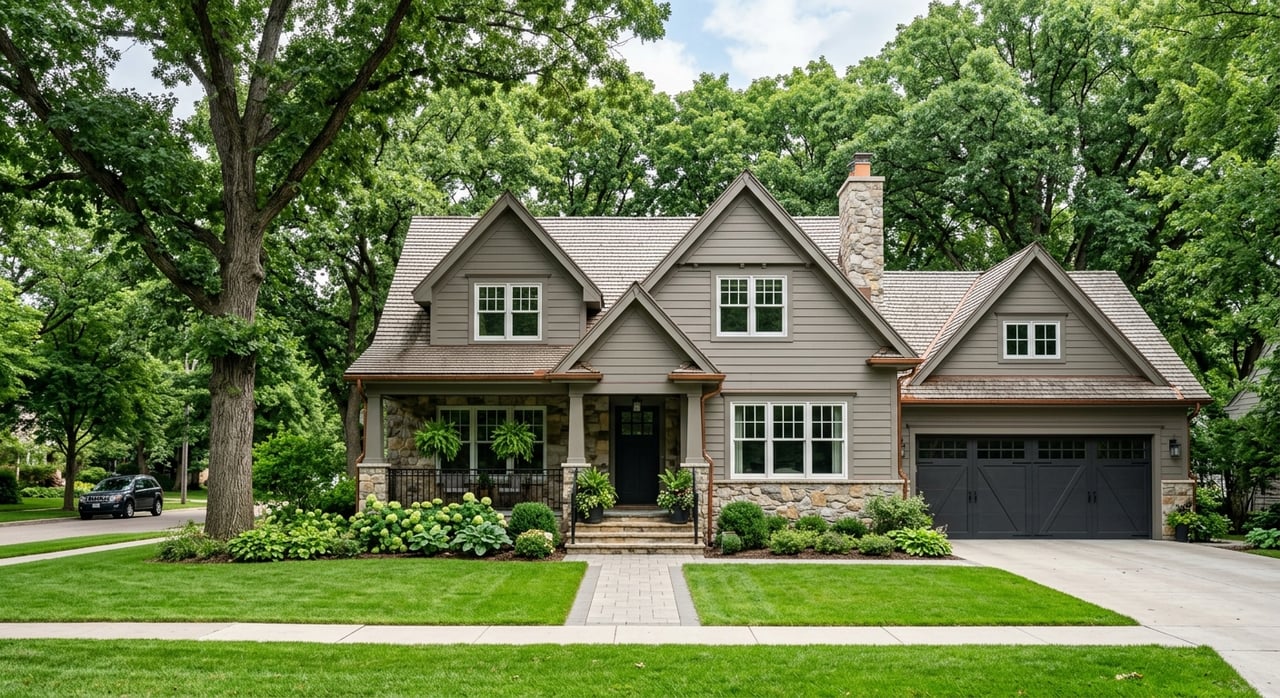
Relocating to Madison WI: How to Pick Your Ideal Neighborhood
If you’re relocating to Madison, one question can shape your entire move: which neighborhood will actually fit your day-to-day life? A home can look perfect online, but if the commute feels off, the park access is not what you expected, or the school assignment is different than you assumed, the move can get more complicated fast. The good news is that Madison gives you strong public tools to compare areas with more confidence. Let’s dive in.
Madison is a growing city of about 285,300 residents, and the city describes its neighborhoods as distinct places with their own character and community, according to the U.S. Census QuickFacts for Madison. That means there is no single “best” neighborhood for everyone.
A better approach is to match your search to the way you actually live. For most buyers, that means focusing on a few practical factors first:
Before you narrow your list, it helps to review the City of Madison’s area plan map and neighborhood resources. The city lets you enter an address to find the relevant area plan, which can give you a more accurate picture than relying on broad neighborhood reputations.
One of the smartest ways to choose a Madison neighborhood is to organize your home search around commute corridors, not just price or square footage. If you work downtown, on the west side, at UW-related destinations, or in Verona, your daily travel pattern can change which areas feel convenient.
Metro Transit serves residential neighborhoods, the Isthmus, schools and universities, business districts, parks, shopping, and entertainment areas. Madison’s first BRT line, Rapid Route A, now runs east-west from the Sun Prairie Park and Ride to Junction Road, with 15-minute weekday service until 8:00 p.m. and 15-minute Saturday service until 7:00 p.m. Routes B and F also board at stations along that corridor.
For many relocating buyers, that makes access to BRT stops an important part of the decision. A neighborhood that looks slightly farther out on a map may still feel well connected if it has an easy link to the east-west BRT route.
The city’s West Area Plan says the west side has about 33,000 residents and more than 23,000 jobs, with employment concentrated around University Research Park, Hilldale, and West Towne Mall. The same plan notes changes tied to BRT and redevelopment projects like Madison Yards, University Crossing, and the Exact Sciences headquarters.
Downtown is another major job center. The city’s Downtown Area Plan covers roughly 700 acres between Park and Blair Streets and between Lakes Mendota and Monona. The city says the area has 34,000 residents and more than 60,000 jobs, and that BRT has made downtown more accessible across the city.
If your work is centered in either of these areas, it is worth testing neighborhoods based on how easily they connect to downtown or west-side corridors during the times you would actually travel.
If you expect to commute toward Verona or Epic, transit options matter here too. The city notes that Routes 55 and 75 serve the Epic/Verona corridor, and all-day Verona service with Route D2 is set to begin in August 2025.
For buyers looking south of Madison, Fitchburg can also be part of the conversation. The city of Fitchburg says it is minutes from the Capitol, UW–Madison, and both the east and west sides of Madison, with Interstate 39/90/94 access about 7 miles away. If highway access is part of your routine, that may be worth weighing alongside in-city options.
If you are making a short house-hunting trip, RoundTrip Greater Madison can help you compare Metro routes, park-and-rides, BCycle stations, vanpools, and carpool options. The program also includes an Emergency Ride Home option for qualifying car-free or carpool commuters.
That kind of flexibility matters if your schedule changes often or you want a backup plan. It can also help you compare neighborhoods more realistically than a simple map search.
If schools are part of your move, one of the most important rules is simple: check the exact address. In Madison and greater Dane County, school assignment should never be assumed based on a neighborhood name alone.
Madison Metropolitan School District says it serves more than 25,000 students in 52 schools, and it provides a Find Your Attendance Area tool. MMSD is also in an active boundary-review process tied to future growth, so assignments can be more nuanced than many relocating families expect.
This matters even more in nearby communities where municipal boundaries and school district boundaries do not always match. For example, the City of Fitchburg notes that it sits within the Madison, Oregon, and Verona school districts on its schools and community services page.
If you are comparing homes in and around Madison, use district tools and parcel data to confirm details for each address. The research step may take a few extra minutes, but it can prevent major surprises later.
When you relocate, the home is only part of the decision. Madison’s lakes, parks, bike connections, and street patterns often shape how a neighborhood feels just as much as the housing stock does.
Madison Parks says the city is surrounded by more than 15,000 acres of lakes, and the 2025-2030 Park & Open Space Plan and lake access information show that Madison has more than 290 parks, manages 5,700 acres, and that more than 95% of residents live within a 10-minute walk of a park.
If outdoor access is part of your lifestyle, that is not a small detail. It can help you decide whether you want to prioritize shoreline access, larger park systems, or a more urban setting with quick connections to trails and open space.
If you picture weekends on or near the water, pay attention to the specifics. Madison maintains launch access on Lake Monona and Lake Mendota at sites including Law, Olbrich, Olin, Marshall, Spring Harbor, Tenney, and Warner. A lake access permit is required year-round at designated launch sites.
That means “near the lake” can mean different things depending on what you actually want to do. Kayaking, boating, walking the shoreline, and simply having quick access to water views may point you toward different areas.
Once you have your commute, school, and lifestyle priorities in mind, you can start comparing neighborhoods based on the feel they create.
For buyers who want the most urban experience, downtown Madison and the Isthmus are often the starting point. The city describes downtown as a major center for jobs, culture, and community, and the current planning area sits between Park and Blair Streets and between Lakes Mendota and Monona.
This part of Madison often appeals to buyers who want a more walkable, transit-connected lifestyle with quick access to major destinations. If convenience and city energy are high on your list, this area deserves a close look.
If you want a central location with strong access to parks, lakes, and major institutions, near-west and lake-adjacent neighborhoods may feel like a better fit. The city’s Brittingham-Vilas neighborhood planning materials describe proximity to UW–Madison, the Capitol, State Street, Brittingham Park, Henry Vilas Park and Zoo, Monona Bay, and Lake Wingra.
The same planning documents note a mix of housing types, including multi-family housing around the Triangle and more single-family blocks elsewhere. That mix can be helpful if you want central-city access but also want to compare different home styles and block patterns within the same general area.
A more current example of neighborhood change is the Triangle redevelopment. The city says the project is consistent with the 2019 Triangle Monona Bay Neighborhood Plan and could add up to 1,200 homes over the next decade while emphasizing more pedestrian- and bike-friendly connections. For relocating buyers, this is a useful reminder that some central neighborhoods are evolving quickly.
Some buyers care less about being in the urban core and more about easy access to green space. In Madison, that can be a meaningful way to narrow your list because park access is so widespread across the city.
If daily walks, playgrounds, open space, or lakefront recreation matter to you, compare neighborhoods through that lens early. The best fit may not be the one with the highest profile. It may be the one that makes your daily routine easier and more enjoyable.
Your Madison-area search may also include nearby communities with a more suburban development pattern. Fitchburg is one example the city highlights for mixed-use and walkable development in its Technology Neighborhood, along with strong highway access and service from Madison Metro.
For buyers who want more parking, newer development, or easier regional access, nearby suburban-style options can make sense. The key is to compare them against your actual priorities rather than assuming city or suburban living is automatically the better choice.
If you are flying in or making a short visit, a simple plan can make your trip much more productive.
A short trip can still tell you a lot when you focus on the patterns that shape daily life.
Choosing the right Madison neighborhood is rarely about finding the one with the biggest name recognition. It is about finding the place that supports your routine, your goals, and the lifestyle you want after the move.
When you evaluate neighborhoods through commute, school verification, lake and park access, and overall feel, your search becomes much clearer. If you want a local guide who can help you compare Madison-area options with a practical, personalized approach, connect with Susan Sutton for trusted relocation insight and neighborhood guidance.

Don't navigate the world of real estate alone. Let Susan Sutton be your advocate on the path to finding your dream home or selling your current property. Susan is dedicated to making your real estate journey seamless and rewarding.