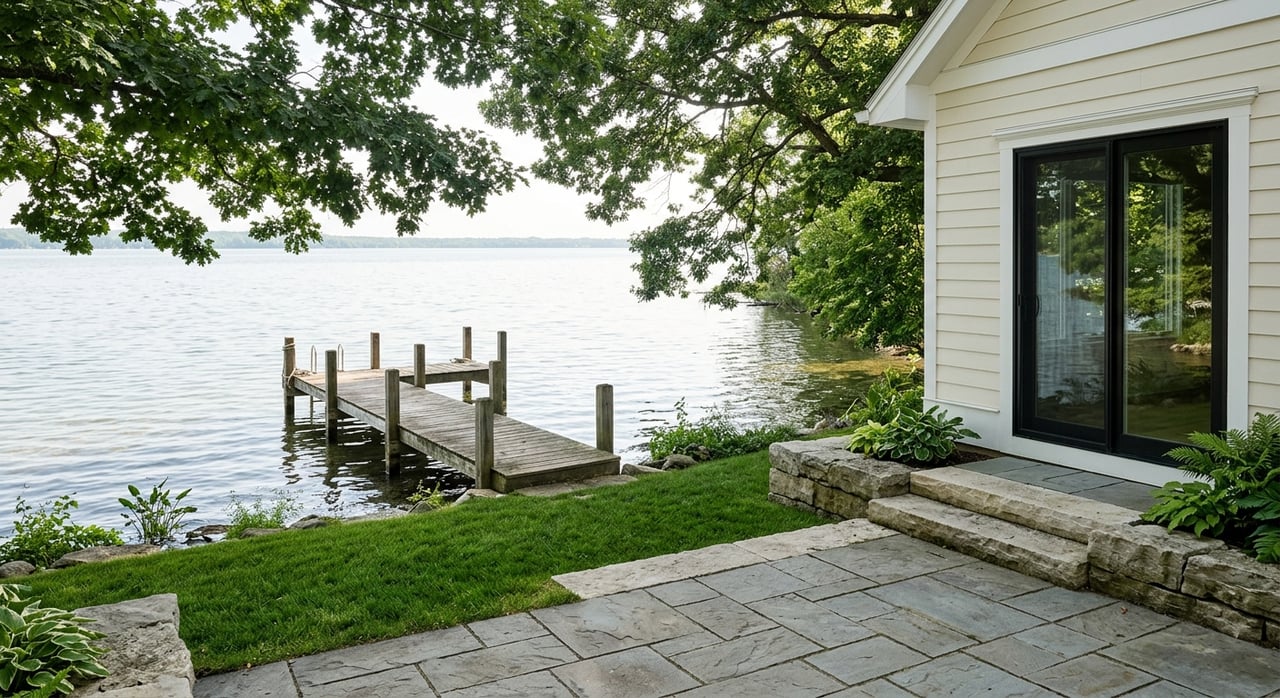
Compare Madison Lakes for Buyers: Mendota, Monona, Waubesa & Kegonsa
Choosing a Madison-area lake is not just about finding water views. It is about matching your everyday life to the kind of setting, access, housing, and recreation that fits you best. If you are deciding between Lake Mendota, Monona, Waubesa, and Kegonsa, this guide will help you compare what each lake actually offers so you can narrow your search with more confidence. Let’s dive in.
The four lakes most buyers compare are part of the connected Yahara chain, running from north to south: Mendota, Monona, Waubesa, and Kegonsa. According to the Clean Lakes Alliance lake overview, Mendota and Monona are considered deep lakes, while Waubesa and Kegonsa are shallower drainage lakes with faster turnover.
That matters because each lake tends to create a different day-to-day experience. In simple terms, Mendota and Monona often feel more city-connected, while Waubesa and Kegonsa tend to feel quieter and farther from the urban core.
Lake Mendota is the largest and deepest of the four, at 9,842 acres with a maximum depth of 82 feet and about 22 miles of shoreline, based on the Clean Lakes Alliance Mendota profile. It sits at the top of the Yahara chain, and water moves through it more slowly than the other lakes.
If you picture a classic Madison lake lifestyle with broad views, active shorelines, and strong access to downtown and the university area, Mendota is often the first lake buyers explore. It tends to offer the widest mix of scenic lakefront living and established city neighborhoods.
Mendota has some of Madison’s oldest and most architecturally significant housing. The Sherman Avenue Historic District documentation notes homes that date largely from the mid-1890s through the late 1920s, with many originally built as single-family residences.
That gives parts of the shoreline a historic, established feel that many buyers love. You will also find denser housing patterns near the southeast shore and the Langdon area, where older homes and higher-density redevelopment sit closer to the city core.
Mendota is the most expansive and activity-heavy lake in the chain. The City of Madison lake access page lists launch sites at Marshall, Spring Harbor, Tenney, and Warner.
Marshall Park adds to that appeal with boat rentals, fishing, swimming, picnicking, volleyball, and event space. Around Tenney Park and the isthmus, you also get the kind of shoreline walking and birding that appeals to buyers who want everyday lake access, not just weekend use.
Clean Lakes Alliance reported fair offshore phosphorus and clarity for Mendota in 2024. In 2025, nearshore monitoring placed Mendota among the clearest lakes in the chain, while also noting notable green algae pressure on the surface, according to the 2025 water quality monitoring results.
For buyers, the key point is balance. Mendota often delivers some of the strongest scenery and location advantages in the region, but like every lake in the chain, conditions can vary by season and location.
Lake Monona is the second lake in the chain and the most urban in character. It covers 3,277 acres, has a maximum depth of 74 feet, and sits close to downtown Madison, with a shoreline shaped by city neighborhoods, public parks, and redevelopment areas, according to the Clean Lakes Alliance State of the Lakes report.
If you want a lake that feels integrated into daily city life, Monona is often the best fit. It gives you a waterfront setting without stepping far away from Madison’s central core.
Housing around Monona includes some of Madison’s earliest residential districts, including areas tied to First Settlement and Third Lake Ridge. At the same time, the City of Madison historic districts and planning resources show that the broader Monona-adjacent area also includes newer infill and redevelopment activity.
That mix makes Monona appealing if you want options. Depending on where you search, you may find older housing stock, downtown-adjacent living, or areas shaped by newer planning and reinvestment.
Monona is the city-lake option for public access and waterfront activity. The City of Madison lake access page lists access points at Law, Olbrich, and Olin.
Olbrich Park stands out because it combines a beach, boat ramp, and kayak rental with its location next to Olbrich Botanical Gardens. The city’s waterfront planning describes this shoreline as an activity-rich signature park and a gateway to downtown, which helps explain why Monona feels so woven into the city experience.
In 2024, Monona fell into the fair offshore category for clarity and phosphorus. In 2025, nearshore monitoring again found Monona among the clearest lakes in the chain, with relatively low cyanobacteria frequency, according to the Clean Lakes Alliance monitoring summary.
Monona does have listed Clean Water Act impairments for PCBs, phosphorus, and PFAS. That is important context, but from a lifestyle perspective, many buyers still focus on its mix of urban access, lake views, and public shoreline amenities.
Lake Waubesa is smaller and shallower than Mendota and Monona, at about 2,083 acres with a 38-foot maximum depth and 15-foot mean depth, based on the State of the Lakes report. It sits in the lower half of the chain and receives water moving down from the upper lakes.
For many buyers, Waubesa feels like the middle ground. You still get access to Madison-area conveniences, but the setting often feels more open, less urban, and more connected to wetlands and natural shoreline features.
Waubesa is closely tied to McFarland and the Town of Dunn. The Village of McFarland information page places McFarland on Madison’s southeast side, bordered by Lake Waubesa and Upper Mud Lake, while the research also notes that the Town of Dunn remains heavily shaped by agriculture and undeveloped land.
In practical terms, that usually means a more suburban-to-semi-rural housing pattern. Buyers often look here for more space, a quieter setting, and a lake lifestyle that feels less centered on the city shoreline.
Waubesa has a strong nature-and-wetlands identity. Goodland County Park on the west shore offers shoreline access, a beach, a boat launch, and an unsupervised swimming area.
Dane County also runs paddling and wetlands programming on Waubesa, and the Babcock Lock at McFarland adds another point of interest for boaters moving through the Yahara system. If your idea of lake living includes paddling, quieter shorelines, and natural surroundings, Waubesa deserves a close look.
In 2024, Waubesa also landed in the fair offshore category. Nearshore monitoring in 2024 showed the highest nearshore clarity of the five Yahara lakes, and in 2025 monitors reported no significant cyanobacteria blooms from June through August, according to the Clean Lakes Alliance report.
Waubesa also reflects what happens upstream. Clean Lakes Alliance notes that much of the phosphorus entering Waubesa comes through Monona, which is a helpful reminder that these lakes function as a connected system.
Lake Kegonsa is slightly larger than Waubesa in surface area, at about 3,210 acres, but it remains a shallower drainage lake with a 32-foot maximum depth and 17-foot mean depth, according to the State of the Lakes report. Its drainage area is predominantly rural and agricultural.
If you are looking for a more small-town or rural-feeling lake lifestyle, Kegonsa often stands apart from the other three. It tends to appeal to buyers who care as much about outdoor recreation and a quieter setting as they do about direct city access.
Kegonsa extends farther south and east near Stoughton, and the surrounding area generally feels less urban than Mendota or Monona. Compared with the lakes closer to the isthmus, buyers often experience Kegonsa as more removed from Madison’s daily pace.
That can be a plus if you want a stronger weekend-lake feel in your primary home or second-home search. It can also appeal if you prefer small-town proximity over downtown adjacency.
Kegonsa has a strong park, camping, and fishing identity. Lake Kegonsa State Park offers a beach, picnic shelters, a boat launch, camping, and trails.
The Wisconsin DNR also describes Kegonsa as an excellent year-round fishing lake, with especially strong walleye and panfish action. For some buyers, that single feature can move Kegonsa to the top of the list.
Kegonsa was also rated fair offshore in 2024, but nearshore clarity was the weakest in the chain and bordered on murky. The same reporting showed the highest cyanobacteria bloom pressure in 2024, and 2025 monitoring again found the highest bloom frequency on Kegonsa, according to the 2025 monitoring update.
That does not automatically remove Kegonsa from consideration. It simply means buyers should evaluate it with a clear understanding of the lower-chain conditions and how that may shape their lake experience.
If you are comparing these lakes side by side, it often helps to think in terms of lifestyle fit rather than trying to rank them from best to worst. Each one offers a different mix of setting, housing, public access, and water conditions.
From a general geography standpoint, Monona and the central Mendota shore are typically closest to the isthmus and Capitol Square. Waubesa usually sits in the middle, and Kegonsa is generally the farthest south and east, making it the longest commute of the four in broad terms.
That ranking comes from location, not exact drive-time analysis. If commute rhythm is a major factor in your move, it is smart to compare specific addresses rather than relying on a general lake-by-lake assumption.
The right Madison lake is the one that fits how you actually want to live. If you want city energy and historic housing, Mendota or Monona may rise to the top. If you want more space, more natural shoreline context, or a stronger fishing-and-park lifestyle, Waubesa or Kegonsa may make more sense.
If you want help comparing lakefront neighborhoods, shoreline housing options, or lifestyle fit across Dane County, Susan Sutton offers the kind of thoughtful, local guidance that can make your search clearer and less stressful.

Don't navigate the world of real estate alone. Let Susan Sutton be your advocate on the path to finding your dream home or selling your current property. Susan is dedicated to making your real estate journey seamless and rewarding.